News
A new chapter for Andros. We’ve joined Medallion to bring you automation, visibility, and the largest AI-native credentialing platform in the country.
Read more →
Provider Network Lifecycle
Reframing how health plans design, build, and manage provider networks
Provider networks are the backbone of every health plan, but building and maintaining them has become increasingly complex. Legacy systems, fragmented data, and reactive processes are no longer enough to keep up with changing member expectations, provider needs, and market conditions. We’re still using a decades-old playbook. Health plans need a new playbook for new times. One that’s smarter and more strategic to build a best-in-class, high-performing network. That’s where the provider network lifecycle comes in.
This deep dive explores the core concepts of a provider network lifecycle, why having one is essential for healthcare organizations to build high-performing provider networks, and how they can transform the network lifecycle.
Table of contents
- Introduction to the provider network lifecycle
- What is a network lifecycle?
- Where Provider Data Management (PDM) fits into the provider network lifecycle
- The key features and benefits of a high-performing network lifecycle
- Why health plans need an advanced network lifecycle
- What a network lifecycle isn’t
- Strategies and best practices to build the best provider network lifecycle
- Network lifecycle FAQs
- Network lifecycle resources
- Network Lifecycle Score Report
Introduction to the network lifecycle concept
The network lifecycle concept introduces a new, integrated approach: one that replaces fragmentation with orchestration, and manual effort with intelligent automation.
A network lifecycle is a comprehensive, connected framework that supports every stage of the provider network journey. From recruitment to credentialing to contracting, monitoring, and optimization, the network lifecycle helps health plans proactively manage their networks with greater precision, agility, and insight.
Importantly, every health plan already has a version of a this—though its effectiveness may vary widely. The question is, how precise, agile, and insightful is it in its current state?
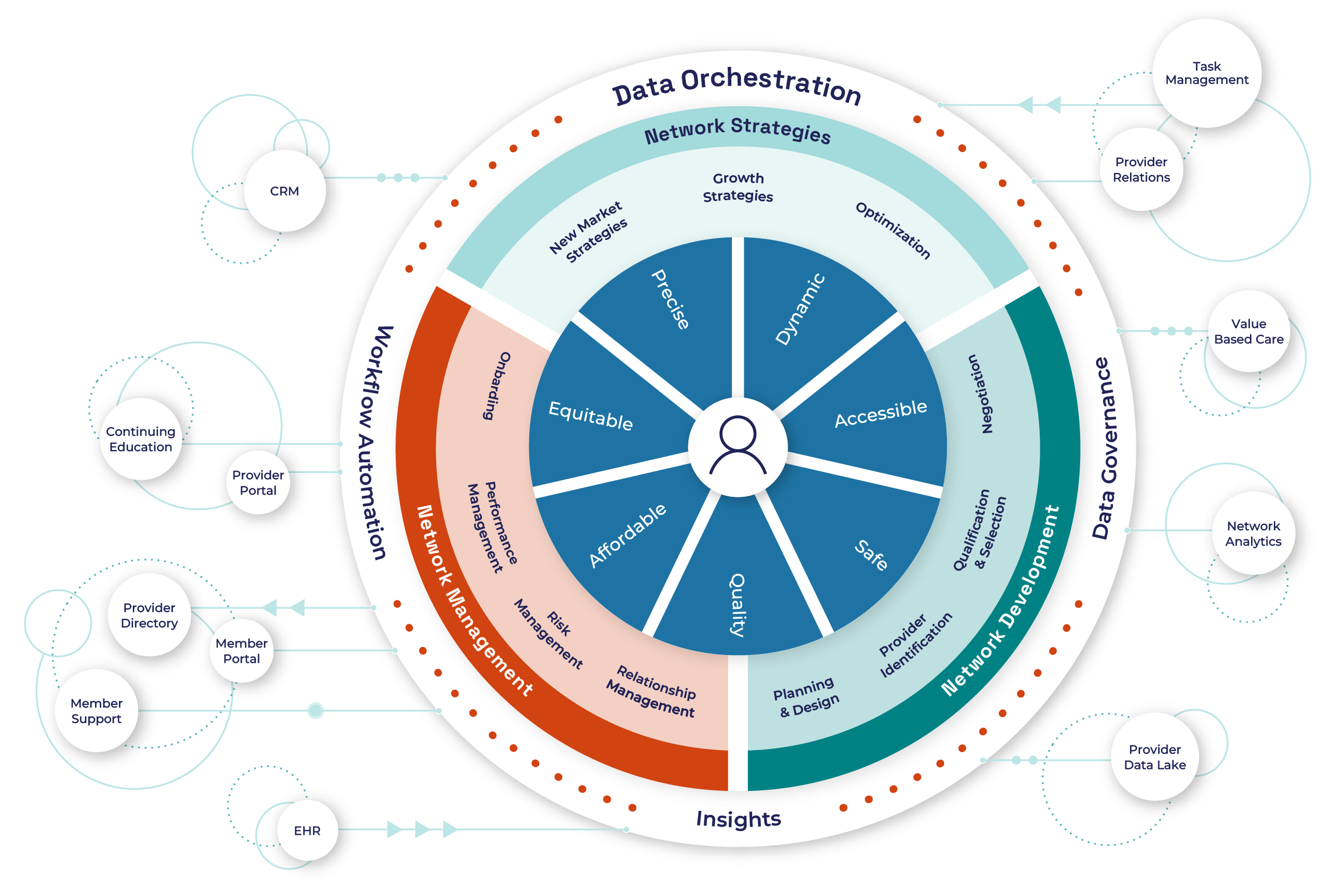
Building a high-performing network isn’t about patching outdated systems. It’s about adopting a modern operating model built on data, automation, and intelligent infrastructure. In this guide, we’ll unpack the fundamentals of the network lifecycle, why they matter now more than ever, and how health plans can use them to drive performance across their provider ecosystems.
What is a provider network lifecycle?
A provider network lifecycle is an integrated ecosystem of technologies and processes designed to orchestrate the entire lifecycle of provider networks. From building and maintaining accurate provider directories to streamlining compliance and enhancing patient-provider connections, it creates a unified solution for healthcare organizations.
It combines data, insight, and automation to streamline every aspect of network management. From market analysis to ongoing performance management, a network lifecycle creates a seamless, end-to-end solution for healthcare organizations.
An advanced network lifecycle enables organizations to stay agile, while maintaining a quality provider network, improving the performance of all connected systems. It not only ensures alignment with strategic goals, but goes beyond what current systems are capable of to activate data and turn insights into actionable workflows.
Where Provider Data Management (PDM) fits into the network lifecycle
While a platform like Andros Arc™ serves as the connective tissue for the entire provider network lifecycle, Provider Data Management (PDM) focuses specifically on the accuracy, integrity, and governance of provider information. Think of it as one critical function within the broader ecosystem.
PDM is the foundation for many network operations—without clean, consistent, and up-to-date provider data, even the most advanced network lifecycle can fall short. Effective PDM ensures that information like provider credentials, specialties, locations, affiliations, and availability is trustworthy and actionable.
Here’s how they differ:
- PDM is about the “truth” of provider data—capturing, cleaning, validating, and maintaining it over time
- The network lifecycle is about how that data flows and is used—across the entire network lifecycle (contracting, credentialing, onboarding, monitoring, and network performance)
Like a PDM, a network lifecycle includes data governance tooling, but it places equal—if not more—value on activating data into the hands of the people and systems that need it.
PDM is one component that powers the network lifecycle. A modern network lifecycle not only relies on strong provider data management—it enhances it, turning static data into dynamic, decision-driving intelligence across the network lifecycle.
The key features and benefits of a high-performing network lifecycle
A high-performing network lifecycle isn’t just about managing networks, it’s about transforming how health plans operate. The most effective ones are built to be adaptive, data-driven, and outcomes-oriented. They don’t just support the work, they elevate it—bringing together disparate processes into a unified system that delivers speed, accuracy, and strategic value across the entire provider network lifecycle. From accelerating credentialing timelines to ensuring network adequacy and improving provider relationships, a strong network lifecycle turns complexity into a competitive advantage.
Here are a few key features and benefits of a network lifecycle:
- Elevated collaboration: fosters common understanding among stakeholders, improving decision-making, and network performance
- Connectivity: integrates disparate systems, ensuring consistency and accuracy across provider data and directories
- Predictive analytics: uses advanced analytics to anticipate trends, identify gaps and recommend strategic actions—all while offering sophisticated segmentation
- Automation: streamlines workflows, reduces manual effort, and increases operational efficiency
- Scalability: Adapts to organizations of any size, growing alongside evolving needs and the introduction of new, or additional, technologies
Why health plans need an advanced network lifecycle
A network lifecycle represents a paradigm shift in provider network management. By aligning technology with the needs of patients, providers, and payers, it ensures a more efficient, high-performing healthcare system. This approach not only benefits operational efficiency, but contributes to achieving the industry’s broader goals of cost reduction, quality improvement, better provider and member experiences, and healthcare equity.
As health plans navigate the complexities of the existing healthcare system—from shifting demographics and provider shortages to rising patient expectations and mounting regulatory pressure—a new standard is needed. Yet most still rely on fragmented systems and outdated processes to manage one of their most critical assets: the provider network.
Traditional network management tools weren’t designed to handle today’s dynamic environment. They operate in silos, struggle to scale, and lack the real-time insight needed to make informed decisions. Which results in gaps in access, administrative bottlenecks, delayed credentialing, and compliance risks that erode member trust and plan performance.
An advanced network lifecycle changes that.
It brings structure and intelligence to every phase of the network lifecycle—enabling teams to move faster, work smarter, and plan further ahead. By integrating data, automating manual workflows, and enabling predictive insights, a high-functioning network lifecycle empowers health plans to:
- Anticipate provider capacity issues before they impact access
- Streamline credentialing and onboarding with real-time data validation
- Maintain network adequacy as populations shift and grow
- Align contracting strategies with quality and cost objectives
- Continuously optimize networks—not once a year, but every day
In short, health plans need a sound network lifecycle not just to survive this next era, but to lead it.
What a network lifecycle isn't
At Andros, we believe a truly modern network lifecycle must be built differently, and isn’t something one vendor should own entirely. This is because no single company can innovate fast enough, or deeply enough, across every phase of network management.
The real value emerges when coordinating the best-of-breed tools that are purpose-built to solve specific problems and deliver tangible outcomes. And for all of that to work, health plans need more than just access to tools. They need orchestration.
So what isn’t a network lifecycle? It’s not a single solution that claims to do it all. It’s not a monolithic system locked behind proprietary walls. And it’s definitely not a static checklist of vendor capabilities. A true network lifecycle isn’t about centralization, but about coordination. It’s an open, interoperable ecosystem where data flows freely, systems communicate, and each component—whether it’s credentialing, contracting, or performance analytics—contributes to a connected whole.
To understand why an advanced network lifecycle is so essential, it helps to compare it to the legacy systems many health plans still rely on. The differences aren’t just technical, they’re transformational.
Here’s how we see a modern network lifecycle redefining what’s possible across every facet of the provider network lifecycle:
| Category | ❌ Legacy Approach ❌ | ✅ Provider Network Lifecycle ✅ |
|---|---|---|
| System structure | Siloed tools and point solutions | Unified, interoperable ecosystem |
| Data flow | Manual, fragmented, slow | Real-time, connected, automated |
| Credentialing | Paper-based, slow, error-prone | Automated, fast, compliant |
| Network adequacy | Periodic, geography-focused evaluations | Continuous, data-driven, population-specific |
| Provider experience | Disconnected, reactive communication | Streamlined, coordinated, provider-friendly |
| Compliance | Risk-prone, retrospective | Proactive, audit-ready, integrated compliance workflows |
| Decision-making | Based on lagging indicators | Driven by predictive analytics and real-time insights |
| Scalability | Resource-intensive, rigid | Flexible, scalable, future-proof |
| Strategic value | Operational burden | Competitive advantage |
Strategies and best practices to build a high-performing network lifecycle
To build a best-in-class network lifecycle, a plan shouldn’t need to choose between innovation and integration. Yet for many health plans, that’s a big barrier to overcome. Oftentimes, organizations invest in tools marketed as comprehensive solutions, only to end up managing a patchwork of disconnected point solutions.
This is where a data orchestration hub comes into play. Selecting the right vendor that plugs directly into your network lifecycle will turn your tech stack into a high-performing machine without forcing you to start from scratch or try to find a vendor that does it all. Because no single solution can address every aspect of the network lifecycle. But we do have the ability to get the right tools working better, together. This way, your tools don’t just coexist—they operate as if they came from the same vendor.
Building a high-performing network lifecycle requires more than just technology, it requires a thoughtful approach that aligns with the realities of the ever-shifting industry. To create one that delivers long-term value, health plans should focus on strategies that enhance connectivity, precision, and usability. Here are 3 foundational best practices to guide development and optimization efforts:
- Design for integration and scalability: Connect seamlessly with existing systems across the network lifecycle and be built to scale as needs evolve. This ensures continuity, reduces silos, and supports long-term growth.
- Use data and automation to drive precision: Leverage high-quality data, automation, and AI to streamline workflows, surface insights, and optimize provider network decisions—reducing manual burden while improving accuracy.
- Prioritize usability and compliance: Balance intuitive design with robust compliance and security standards, making it easy for users to adopt while ensuring regulatory readiness and data protection.
By focusing on these core strategies, health plans can build an ecosystem that not only meets today’s operational demands, but also adapts to tomorrow’s challenges—enabling smarter, faster, and more resilient network management.
Provider network lifecycle FAQs
Because this is a new concept that health plans are wrapping their heads around, we get a lot of questions. Here are the most common questions we typically get asked and hope these answers are helpful to you as you determine your network lifecycle next steps.
What is a provider network lifecycle?
A provider network lifecycle orchestrates a stronger performing network. It’s an integrated ecosystem of solutions and technologies that manages the entire lifecycle of provider networks.
How is a network lifecycle different from traditional provider network management tools?
Unlike siloed or task-specific tools, a network lifecycle offers an integrated, data-driven approach that connects every stage of the network lifecycle, streamlining operations and improving decision-making.
What are the main benefits of using a network lifecycle?
A high-performing network.
Health plans not only gain greater operational efficiency using this approach, but it contributes to achieving the industry’s broader goals of cost reduction, quality improvement, better provider and member experiences, and healthcare equity.
Can a network lifecycle integrate with my existing systems?
Yes. It is designed to integrate with a wide range of platforms and data sources, eliminating silos and enhancing interoperability across your network operations.
Is it customizable to our organization’s specific needs?
Absolutely. The best-built platforms are precise and flexible, allowing you to tailor workflows, data views, and automation to fit your operational model and strategic goals.
How does it help with regulatory compliance?
By centralizing data and automating compliance-related workflows (like credentialing and monitoring), a network lifecycle reduces the risk of human error and ensures up-to-date documentation and audit readiness.
How do I know if my organization is ready?
Most health plans already operate some form of this. The critical question is whether that platform is optimized to deliver measurable outcomes. If you’re facing challenges with disconnected systems, data inconsistencies, delays in provider onboarding, or scaling your network efficiently, it’s a strong sign you’re ready for an advanced platform.
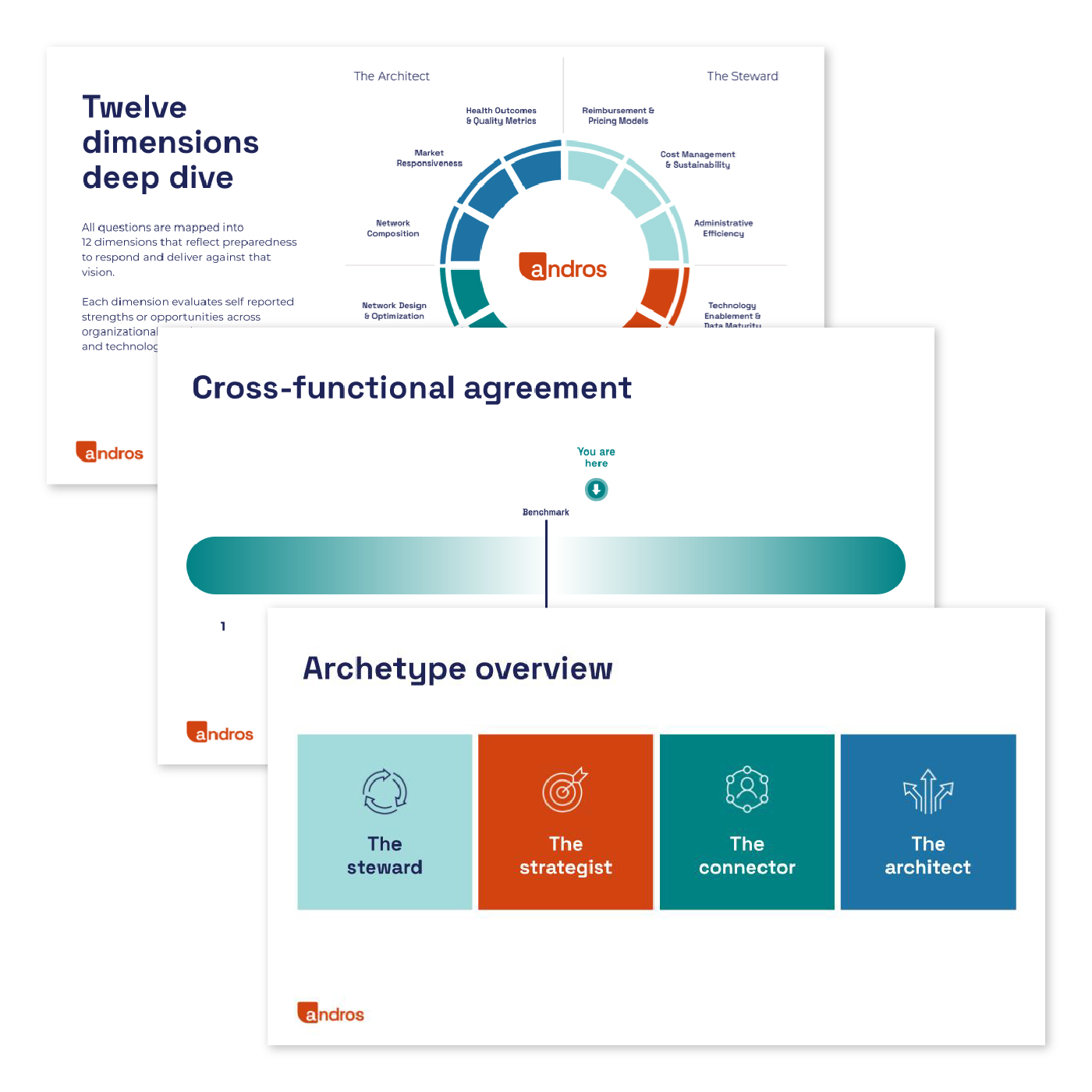
Transformation starts with the Network Lifecycle Score Report
This quick provider network assessment reveals hidden gaps, team alignment, and what to do next—no guesswork required.